
One Girl, Three Jars.
How I'm Growing Mini, Living Oceans.


This week felt a bit like levelling up. After months of tweaking, guessing, and occasionally swearing at jars that refused to grow, I’ve finally pinned down a reliable method for cultivating Nannochloropsis; the marine algae I'm growing to remove carbon from the environment.
I’ve been testing and recording since I started, which means I’ve got my first dataset for my research paper!
It’s simple, low-impact, and uses recycled materials wherever possible. Proof that with a bit of persistence (and vinegar and stuff), community-scale climate action really can be built from the ground up.
There are still challenges — flocculation remains my nemesis — but progress is progress. Here’s everything that’s been happening this week at the Ocean Buffer Project.

Our Tried and Tested NannochloropsisGrowing Method
Here’s exactly how we grow our little jars of living ocean…
1. Start clean:
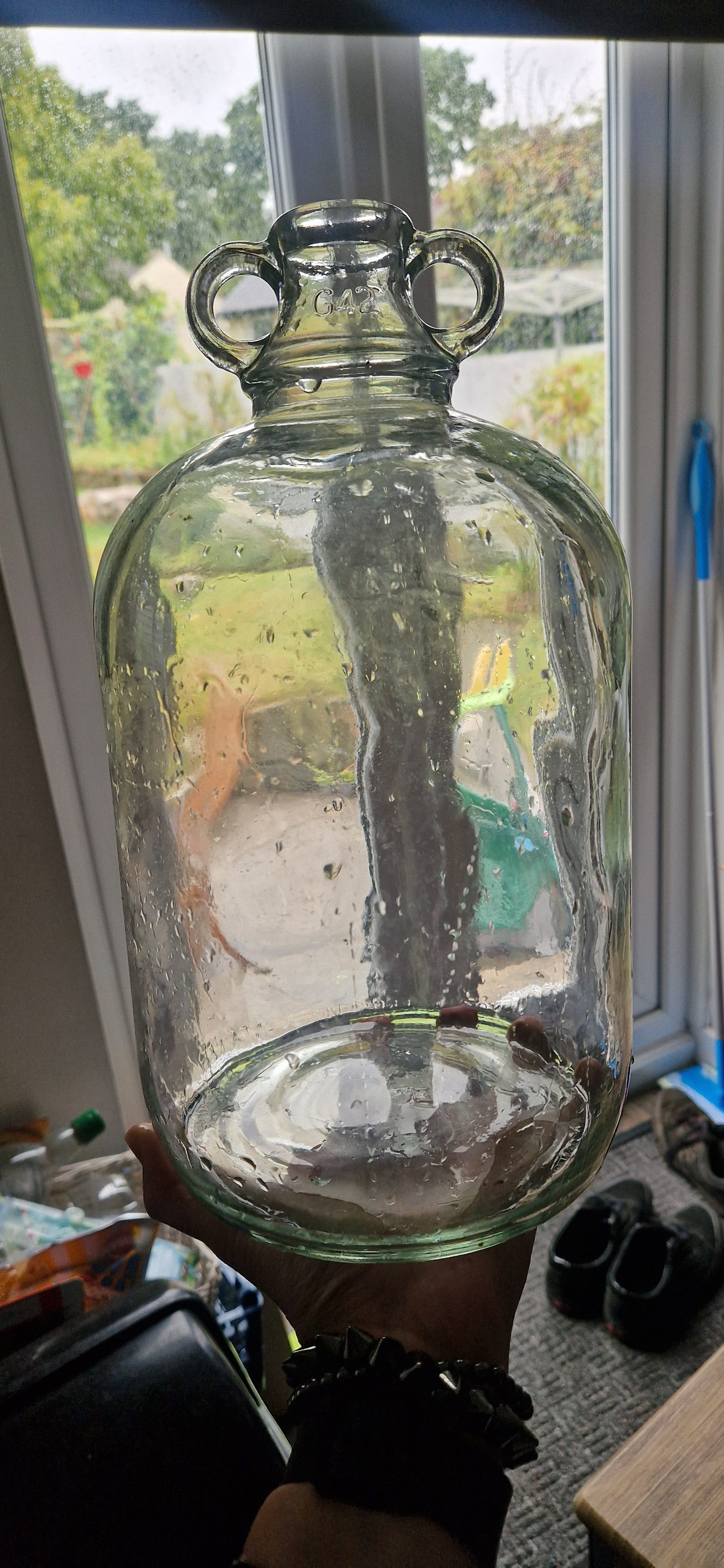
Every jar, even ones that are topped up with new culture, is cleaned out with eco white vinegar and dechlorinated water. No dirt, sediment, or biofilm left behind — contamination can completely derail new growth. A lesson I learned over the last few months!
2. Mix the seawater:
We make synthetic seawater using Instant Ocean to 35 ppt (checked with a refractometer to match natural seawater).
Each jar gets:
1 ml/L nitrogen (N)
1 ml/L phosphate (P)
1 ml/L Seachem Flourish Trace for essential micronutrients and minerals.
Then, going forward:
0.5 ml/L of N and P added daily
0.125 ml/L of Flourish Trace every 4 days
3. Keep them cosy:
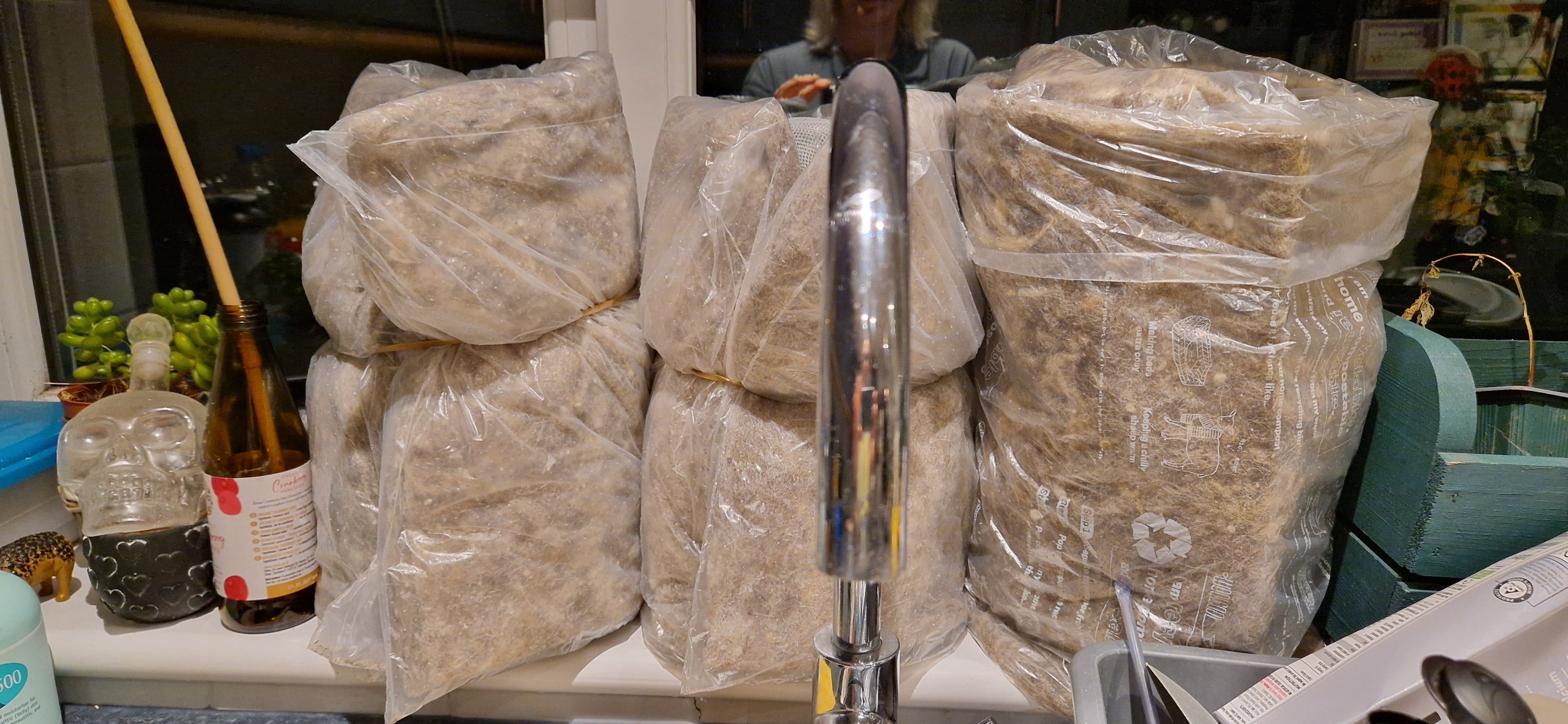
Every evening, the jars are wrapped in recycled wool liners, the kind used in chilled food or medication deliveries. They stay wrapped until morning. It keeps them warm overnight and mimics natural light/dark cycles for photosynthesis.
4. Aerate twice daily:
Using a simple one-litre jug, I aerate each jar twice a day. It’s low-tech, off-grid, and keeps the algae thriving.
5. N-restriction phase:
Around day 5 and 6, I start restricting nitrogen — this is when I've found that growth in the demijohns naturally slows, and the algae begin storing more carbon.
By day 7, growth has plateaued, so that’s our harvest point: strong, carbon-rich biomass, ready for drying and eventually biochar production.
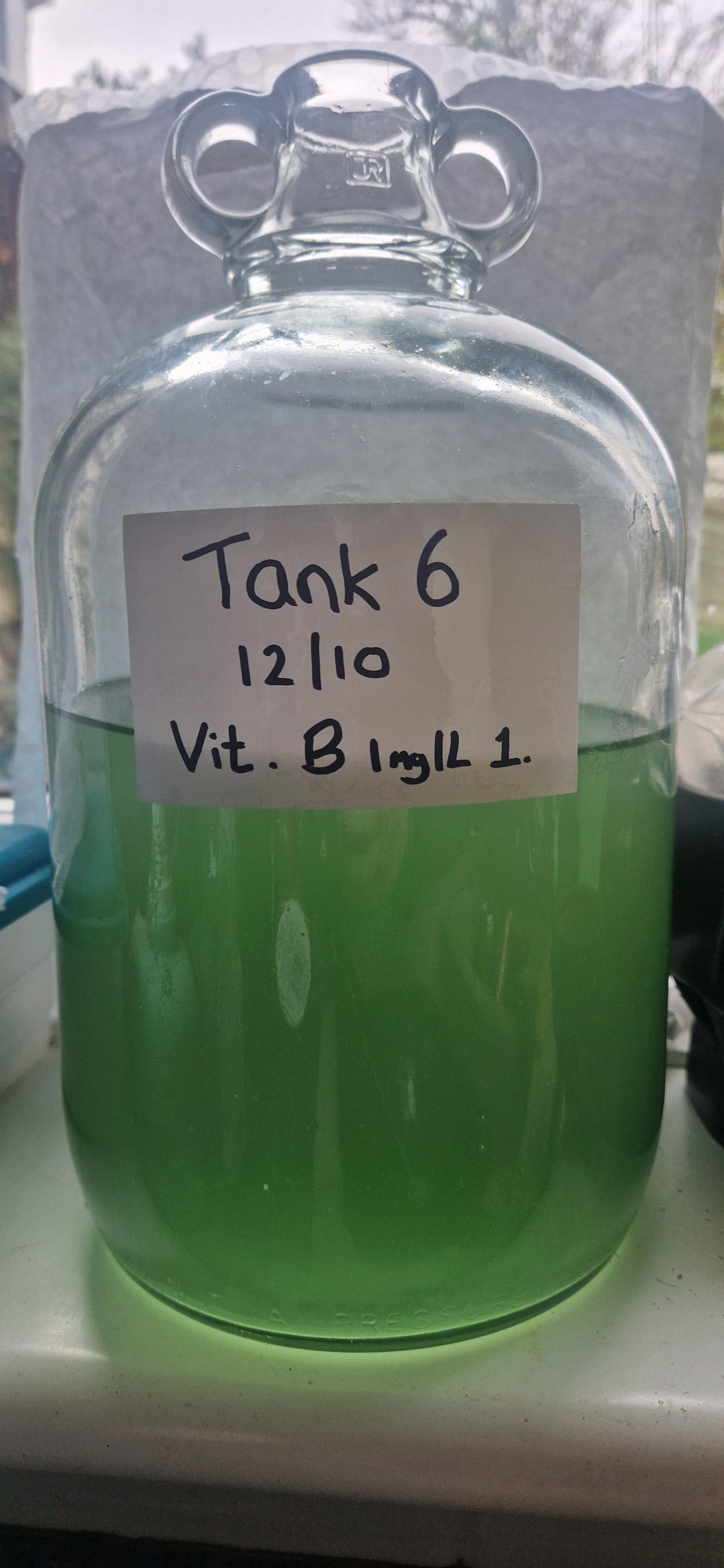
This rich, forest green is what I’m looking for. It took a lot of practice to get it!
Everything about this process is designed to be food-safe, low-impact, and replicable. Anyone, anywhere, could grow their own micro-ocean with recycled materials and sunlight if they follow these instructions.
This Week’s Advanced Trials
I’ve got three tanks running side-by-side at the moment. Now that I know I can grow Nanno successfully, I want to know if other factors can improve my method.
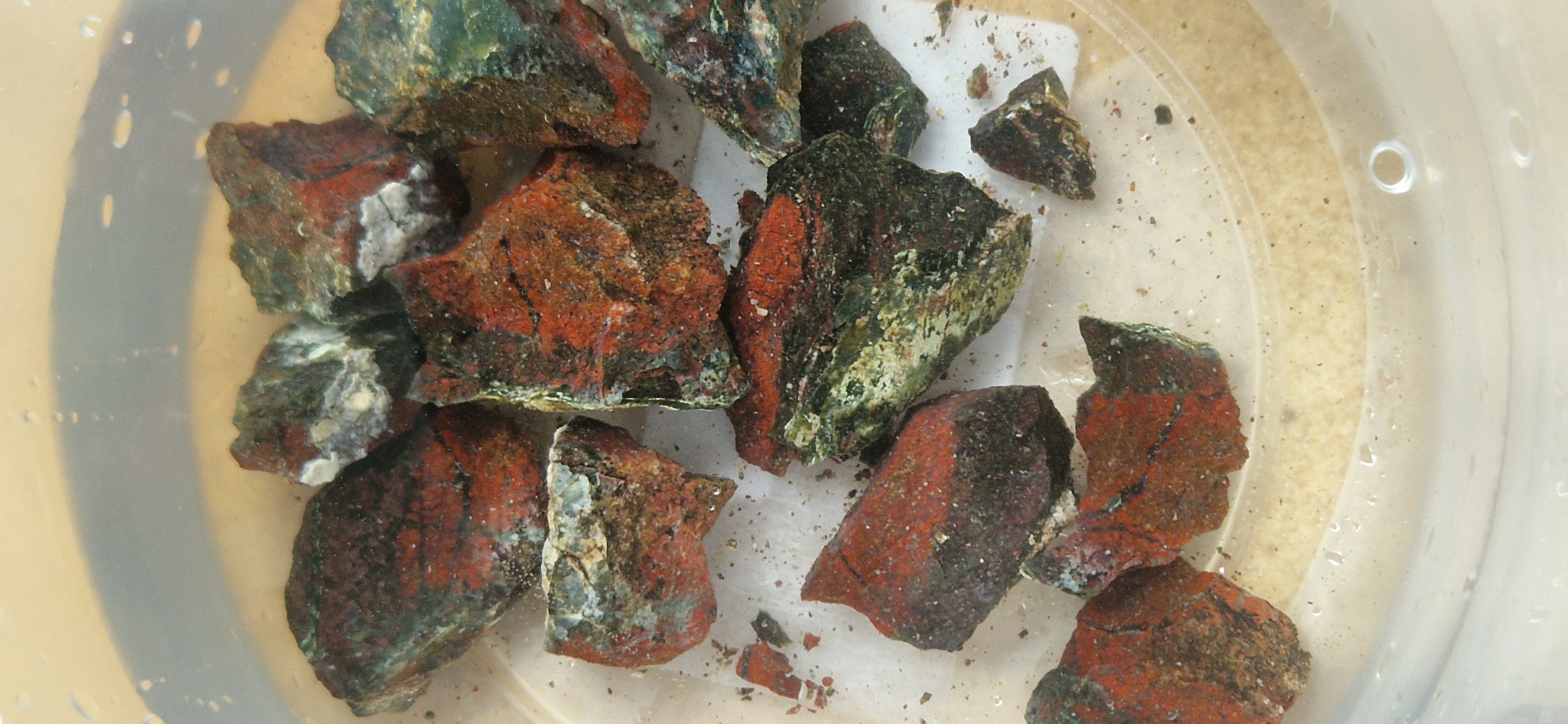
1. Serpentine rock tank – testing Cornish serpentine’s buffering effect and trace mineral release.
2. Vitamin B tank – exploring whether B-vitamins enhance growth or density.
3. Control tank – the baseline, no additives, just our standard seawater recipe, listed above.
Each one is being logged daily using our new Google Form system — tracking pH, colour, opacity, smell, and feeding schedule, among other things.
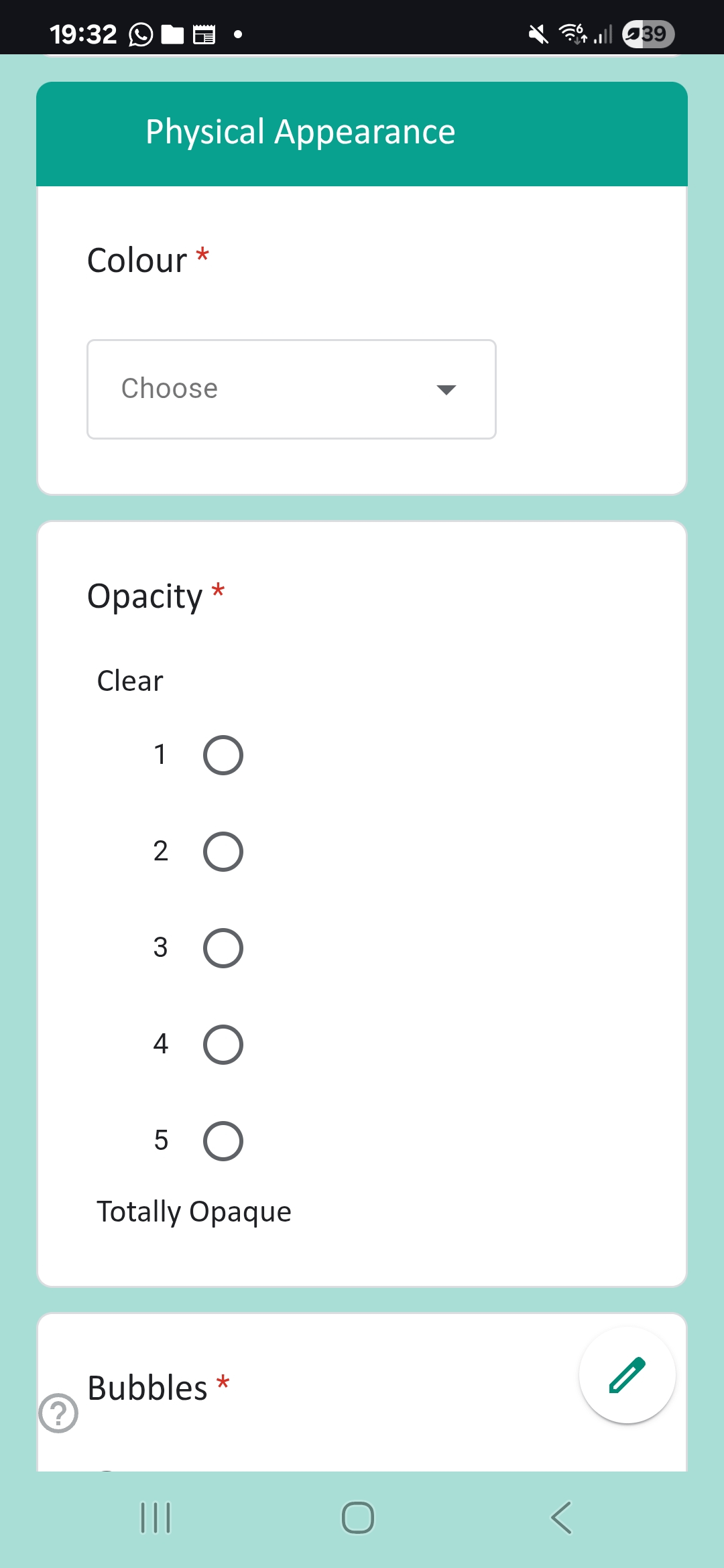
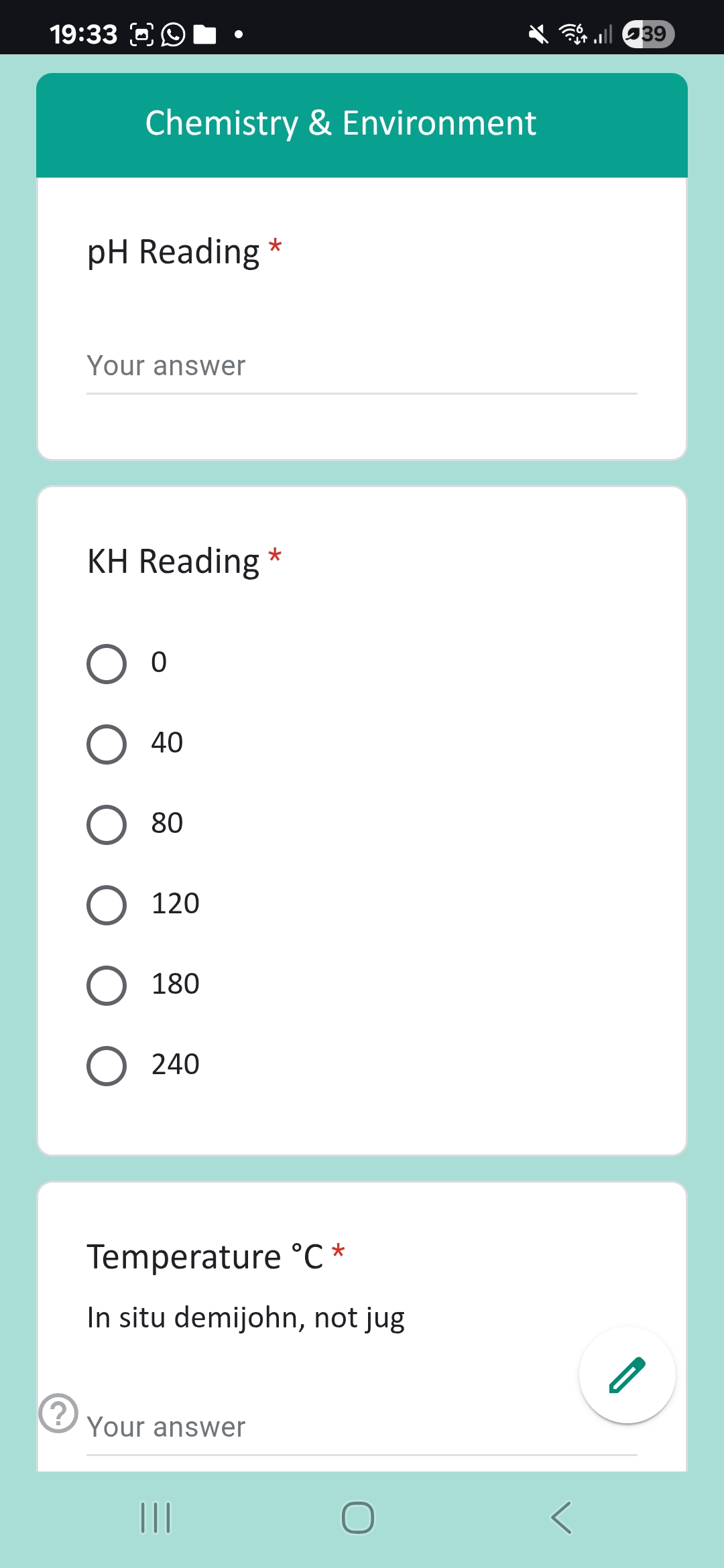
Of course I designed it so the colour scheme matches my branding!
Flocculation: Still a Mystery
Flocculation (the step where we bind the algae together for drying, separating it from the water) is still refusing to behave.
The great floc mystery continues.
I’ve tried multiple safe, low-impact methods: vinegar, lime water, calcium carbonate, and I’m still not seeing the clean, green, jelly-like clumps we need. But I’ve got a new calcium hydroxide method lined up, and I’m not giving up until I can get those perfect, food-safe flocs (lumps). It’s all about pH level, and as soon as I get the balance right, we'll be floccing out of here!
This part matters because it’s the bridge between growing algae and creating biochar — our final, carbon-locking end goal.
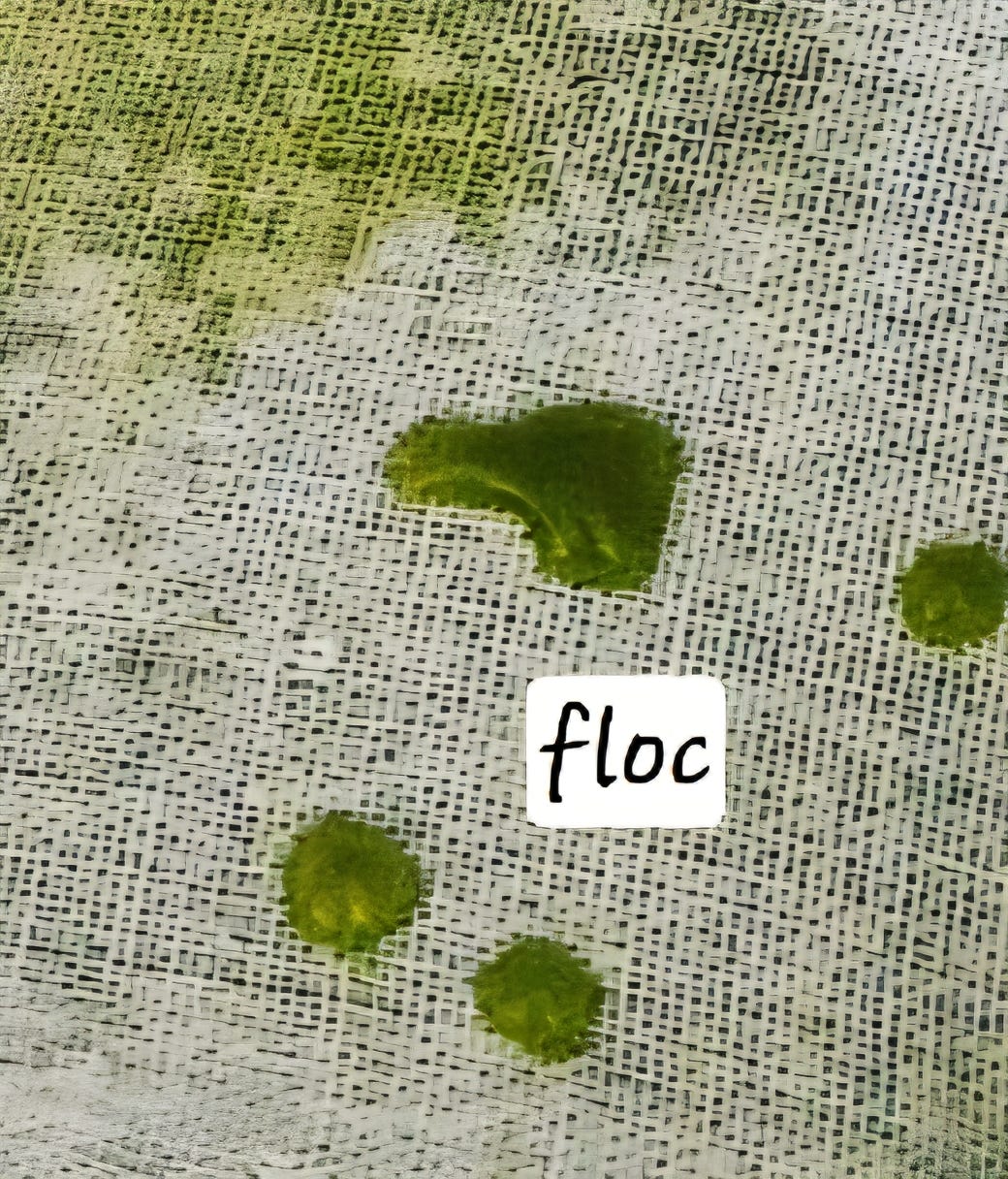
Here’s one I made earlier.
🎧 Podcast Episode 2 Is Live
Episode 2 of Ocean Buffer Diaries is out now!
This one dives into what happened behind the scenes during our first month of inception, back in July. Working through the teething problems and change in plans, as we work towards a functioning model for our community project that, hopefully, genuinely helps ease climate anxiety.
You can listen here → SPOTIFY / SUBSTACK — I’d love your thoughts and feedback.
Closing Thoughts
Each week feels like a mix of success and uncertainty, but I guess that’s the nature of grassroots science. I’m learning that persistence is as important as precision, and that it’s okay to celebrate the small wins (like finally finding the perfect algae feeding recipe!).
Thank you, as always, for reading, sharing, and supporting. Every message and subscription helps this tiny, bonkers, Cornish project grow a little stronger.
💌 If you’ve enjoyed this update, please tap “like” (or “love”, depending on your platform!) and share it with just one friend you think might love it too. That’s how we spread this project, build momentum, and make it a success, together.
Born in Cornwall. Built for the planet.
Upgrade to a paid subscription to access extra content, and support the work we are doing.
🌍 Check out our online shop and all other resources HERE
Ash x
Founder, Ocean Buffer Project CIC
📍 Cornwall, UK
> © 2025. All rights reserved. Please do not reproduce without permission. But do share the science far and wide!