Mics and Microalgae.
It's all algae, algae, algae over here!

Hello again, algae fans!
Hope it doesn’t feel like I’m bombarding you this week, but I’m fully recovered from the event now, and keen to get back to our Thursday newsletter ritual!
It has been a properly quiet week here. Not one of those “quiet but actually still chaotic underneath” weeks. Genuinely quiet.
Even though my head is always busy with the million and one things I need to do, it was needed.
Last week was full-on! Organising the event, pulling everything together, worrying about whether anyone would turn up and then suddenly having a room full of people to speak to. It was a lot, in the best possible way, but it definitely took it out of me.
I think being neurodivergent is something I always fought against in the past, I didn’t want to accept my own limitations! But working with them definitely makes me more productive ultimately. If I do a lot of people-ing, I always need to unwind from that afterwards - I can accept that today.
So this week has been slower, with a bit of breathing space. Time to process, reflect, and gently move things forward again without the same level of pressure.
Here’s what has been happening at Algae HQ.
Into the Recording Studio
One of the really exciting things happening lately has been diving into the podcast side of the project again.
We’ve now been into the recording studio at the Uni, and have started recording proper voiceovers. Not just bits on my phone or quick clips, but actual, structured audio that can start forming the backbone of something bigger.
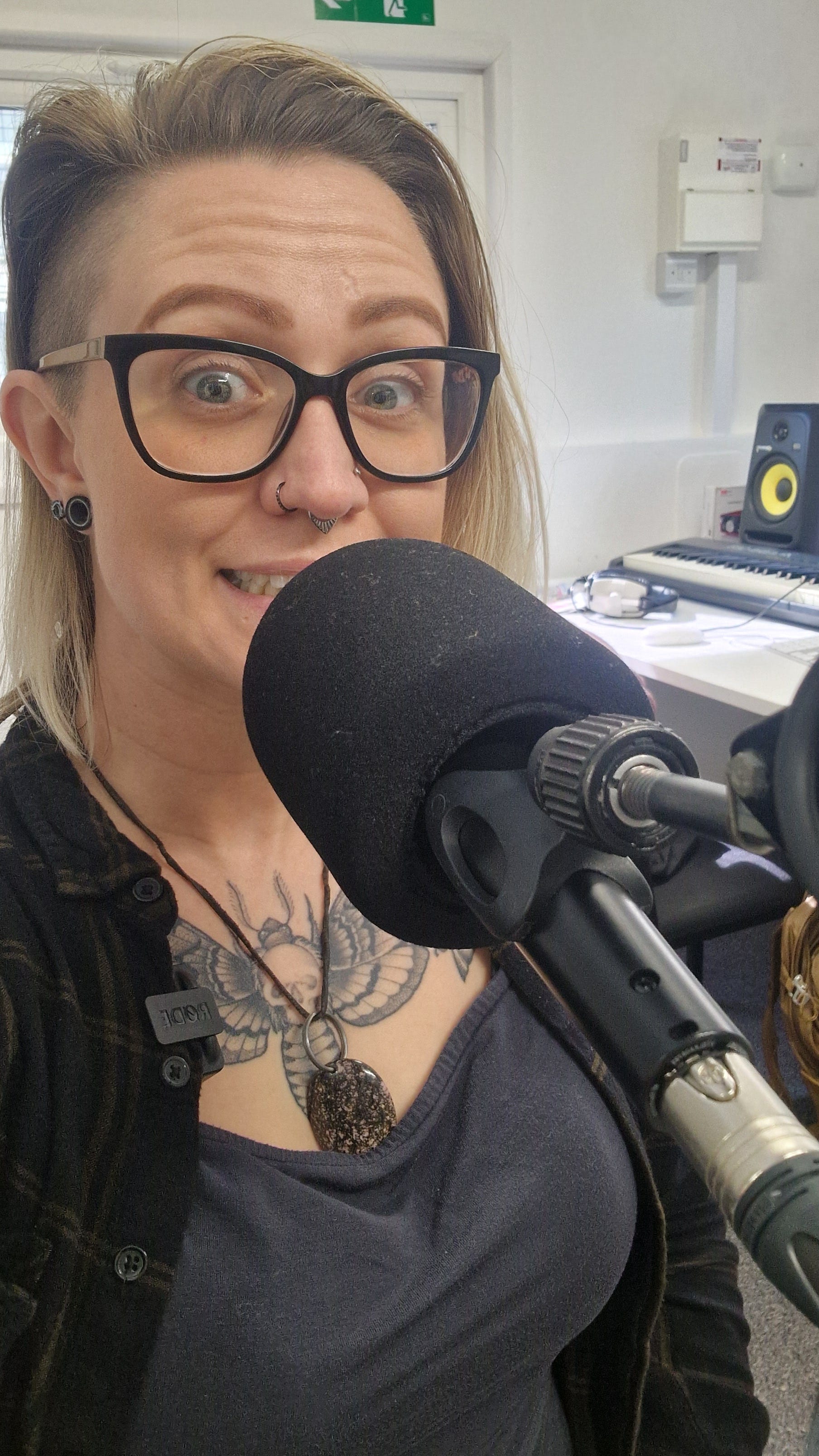
The Soundhouse @ Falmouth University
At the event itself, I was fully mic’d up the whole time, which means we captured a lot, probably more than we bargained for initially!
Conversations with attendees, chats with people from the science world, community voices, and the full presentation as well. It’s the kind of raw, real material that you just can’t recreate afterwards.
A lot of it was filmed too.
That means my brilliant interns from Falmouth University now have a huge amount of content to work with. They’ve got footage for the podcast, for social media, and for longer-form video pieces that can help explain the project in a much more visual and accessible way.
I feel really grateful for that.
Not just because of the output, but because it allows me to let go of that side of things a little. I don’t have to be everything all at once. They bring their own perspective, creativity, and insight, and it already feels like the project is stronger for it.
A Conversation That Opened Another Door
Over the last two weeks, I also spoke to two marine scientists, Dr Russell Arnott and Dr Jordan Grigor, both of whom have offered some advice on the type of algae I’m using.
They both pointed me in the same direction: CCAP.
Culture Collection of Algae and Protozoa (CCAP) is a Scotland based scientific collection that stores and maintains thousands of strains of algae and protozoa. It’s essentially a living library of microscopic organisms, carefully preserved, catalogued, and studied. Researchers all over the world use collections like this to access reliable, well-characterised strains for experiments.
If you want to know what a species can really do, or find something better suited to a specific purpose, this is where you go.
That suggestion felt important, especially hearing it twice in as many weeks!
Up until now, I’ve been working with Nannochloropsis, and its been brilliant. Reliable, resilient, and clearly capable of pulling carbon out of the system at a really encouraging rate.
But the question is always there: is it the best option?
Russell and Jordan both suggested that there may be other strains that could suit what we’re trying to do even better. Different growth behaviours, different physical properties, different harvesting characteristics.
If anyone is going to know that, it’s CCAP.
So that’s the next step. I’ve reached out, asked the question, and we’ll see what might be possible!
Looking at Tetraselmis
One of the strains that’s come up in conversation is Tetraselmis.
At first glance, it’s just another green microalga. But it behaves quite differently to Nannochloropsis, and those differences might matter.
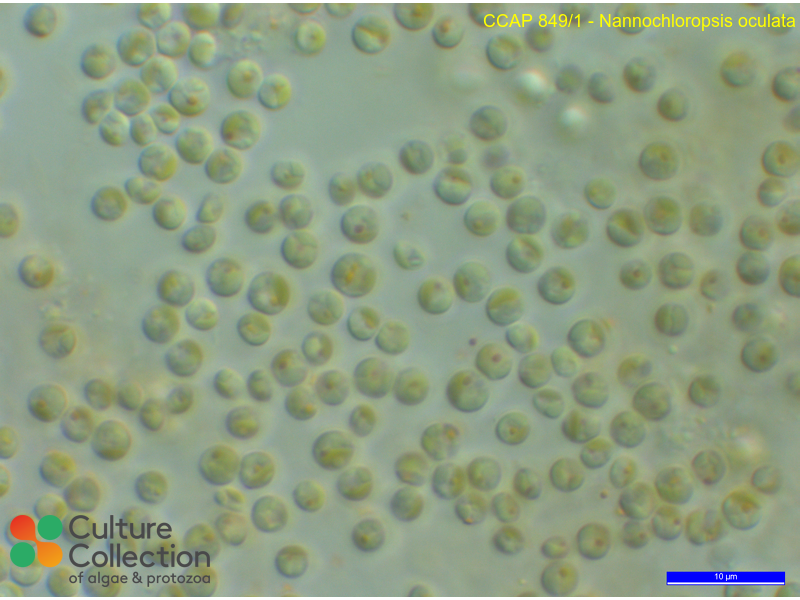
Nannochloropsis Oculata under the microscope - the wee buggers.
Tetraselmis is what’s known as a flagellate. That means it has tiny whip-like structures called flagella, which it uses to move through the water. Instead of just drifting passively, the cells can actively swim.
That movement changes things.
It affects how the cells distribute themselves in the culture, how they interact with each other, and potentially how they respond when we try to harvest them.
The cells themselves are also larger than Nannochloropsis. Not dramatically large in human terms, but significantly bigger on a microscopic scale.
That might be important for flocculation.
Flocculation, at its core, is about getting tiny particles to come together into larger, heavier clumps that can settle out of the water. With Nannochloropsis, the cells are so small that even when they floc, the clumps can be delicate, slow to settle, and sometimes.. a lot of the time.. frustrating to work with.
Larger cells like Tetraselmis may naturally form stronger, heavier flocs. In theory, that could make harvesting easier, faster, and more efficient.
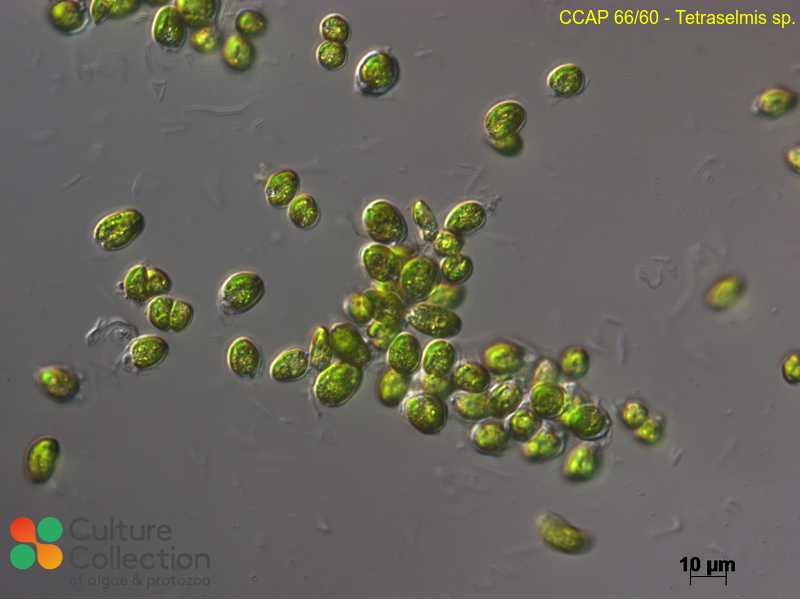
Tetraselmis under the microscope - huge, absolute beasts.
There are trade-offs, of course.
Motile algae behave differently. They may resist settling. They may need slightly different conditions. There’s no guarantee it will work better in practice.
But it’s exactly the kind of question worth asking.
Replicating the Ocean, On Land
Something I’ve been thinking about a lot this week is how closely what we’re doing mirrors what the ocean already does.
When you strip it back, the process is surprisingly simple.
In the ocean, microscopic algae and phytoplankton sit near the surface where there is light. They use that light to photosynthesise, pulling carbon dioxide out of the water and converting it into biomass. As they do that, they release oxygen.
That’s step one: carbon in, oxygen out.
As these organisms grow, they don’t stay suspended forever. Some are eaten. Some die. Some begin to clump together with minerals, organic matter, or other cells.
Those clumps become heavier.
Eventually, they sink.
As they sink through the water column, some of that carbon is recycled back into the system. But a portion makes it all the way down to the deep ocean or seabed, where it can be stored for long periods of time. This is part of what’s known as the biological carbon pump.
It’s one of the planet’s natural carbon removal systems.
What we’re doing with the Ocean Buffer Project is, in many ways, a controlled, visible version of that process.
We grow microalgae in a contained system, using light to drive photosynthesis. Just like the ocean, the algae pull in carbon dioxide and convert it into biomass, releasing oxygen as a byproduct.
We then step in at the point where nature would normally rely on chance.
Instead of waiting for cells to randomly clump and sink, we actively encourage that process. We use flocculation to bring the cells together, forming larger, heavier particles that separate from the water.
That’s our version of aggregation.
From there, we remove the biomass and dry it. That drying step stabilises the carbon, making it far less likely to immediately return to the atmosphere.
In nature, some carbon sinks. Some comes back up. It’s a balance.
In our system, we’re trying to tip that balance. To take what is usually a slow, partial process and make it more intentional.
Not by reinventing anything.
Just by paying attention to how the ocean already works, and carefully recreating those conditions on land, in a way that people can see, understand, and take part in.
🌿 The Ocean Buffer Hub is coming in 2026.
Born in Cornwall | Built for the planet.
🌍 Check out our online shop and all other resources HERE
Proud to be part-funded by Cornwall Council’s Climate and Nature Fund.

Ocean Buffer Hub made possible by The National Lottery Community Environment Fund.

Ash x
Founder, Ocean Buffer Project CIC
📍 Cornwall, UK
> © 2026. All rights reserved. Please do not reproduce without permission. But do share the science far and wide!