
How To Grow Your Own Ocean.
Plus real, live volunteers and business meetings!


Once again it’s Thirsty (for algae) Thursday! 🎉
It has been a busy week. A good week, but definitely a busy one. There has been some time at the Hub, some ocean growing, and a lot of small practical jobs that sit behind the scenes of any project like this. We do now have our first two volunteers and would love to take on more! (Hint, hint).
I think next week may need to be a slightly quieter one so I can catch up with myself and with the many notes and half finished documents that have accumulated along the way! For now, I’ll let you know what I’ve been up to…
A small experiment: testing “Grow Your Own Ocean”
One of the things I have been testing is a first version of the Grow Your Own Ocean™ kit.
The idea is simple. A small jar that allows people to grow a living phytoplankton culture at home or in a classroom. It is not meant to be perfect, and it is not meant to be high-tech. It is meant to be understandable, practical and a little bit beautiful. Something that helps people see ocean processes up close.
For this test version, I have been assembling the contents using materials that are either reclaimed, recycled or naturally occurring. Some are there for visual interest, but several also have a scientific purpose.
Reclaimed slate sand
The base layer is reclaimed slate sand. This is simply slate that I crumbled down myself at home.
Slate is mostly inert in seawater, so chemically it does very little in the jar. Its role is mainly structural and aesthetic. It gives the bottom of the jar a natural seabed look and provides a stable surface for the other materials to sit on.
Using reclaimed slate also means the kit can incorporate a waste material that would otherwise have little use.
Sea glass
There are also a few pieces of sea glass.
These are purely aesthetic. Sea glass is essentially weathered glass that has already spent years being rounded and smoothed in the ocean. It does not meaningfully alter the chemistry of the water, but it helps create the visual sense of a tiny ocean landscape inside the jar.
There is something quite nice about the idea that these pieces have already been shaped by the sea before returning to represent it in miniature.
Granite
A few pieces of granite are included as well.
Granite is another largely inert material in seawater. Like the slate, it plays mostly a structural and visual role rather than a chemical one. It gives the jar a bit of texture and variation and helps the small landscape feel more natural.
I am using the reclaimed granite offcuts that were donated at the start of this project, so that no new stone needs to be quarried for something like this.
Mussel shells
The mussel shells are one of my favourite parts of the jar.
These were rescued from restaurant waste, thoroughly cleaned, boiled and then washed in eco vinegar before being added. By the time they go into the jar they are effectively just clean shell decoration.
Chemically, they have very little effect in this system. Mussel shells are mostly calcium carbonate, but in a stable seawater environment like this they dissolve extremely slowly, so their influence on the water chemistry is minimal over the short growth period of the culture.
Their real value is that they make use of a waste stream. Something that would have gone to landfill instead becomes part of the story of the kit.
And visually, they help the jar look unmistakably marine.
Serpentine
The only material in the jar that is deliberately chemically active is the serpentine.
Serpentine is a magnesium silicate rock that slowly reacts with water and carbon dioxide. This process can release magnesium ions and increase alkalinity slightly. In large-scale ocean chemistry this kind of reaction is being studied as part of enhanced weathering approaches to buffering acidity.
In the context of the Grow Your Own Ocean™ jars, the serpentine serves as a small demonstration of that idea. It introduces people to the concept that some minerals interact with seawater chemistry rather than simply sitting in it.
It is a tiny system, so the effects are small, but it helps connect the jar to the broader thinking behind the Ocean Buffer Project™.
This is still very much a test version. I am checking that everything is easy to prepare, safe to handle and simple enough for someone else to use without difficulty.
If it works, the result will be a small jar that lets people grow phytoplankton while also telling a story about waste materials, ocean chemistry and the living systems that support our planet.
For now, it sits on the windowsill like a genuine little ocean.


Volunteers
Another thing that has been taking shape this week is volunteering.
Ocean Buffer Project™ has always been intended as a community effort. The land in Treverva will need people who want to get their hands dirty, help shape the space and build something useful together.
Right now that mostly means practical work while we prepare the site. Clearing areas, planting, building beds, setting up growing spaces and generally helping turn a rough patch of land into somewhere we can cultivate algae and run workshops. Someone described it to me as extreme gardening, which feels fairly accurate!
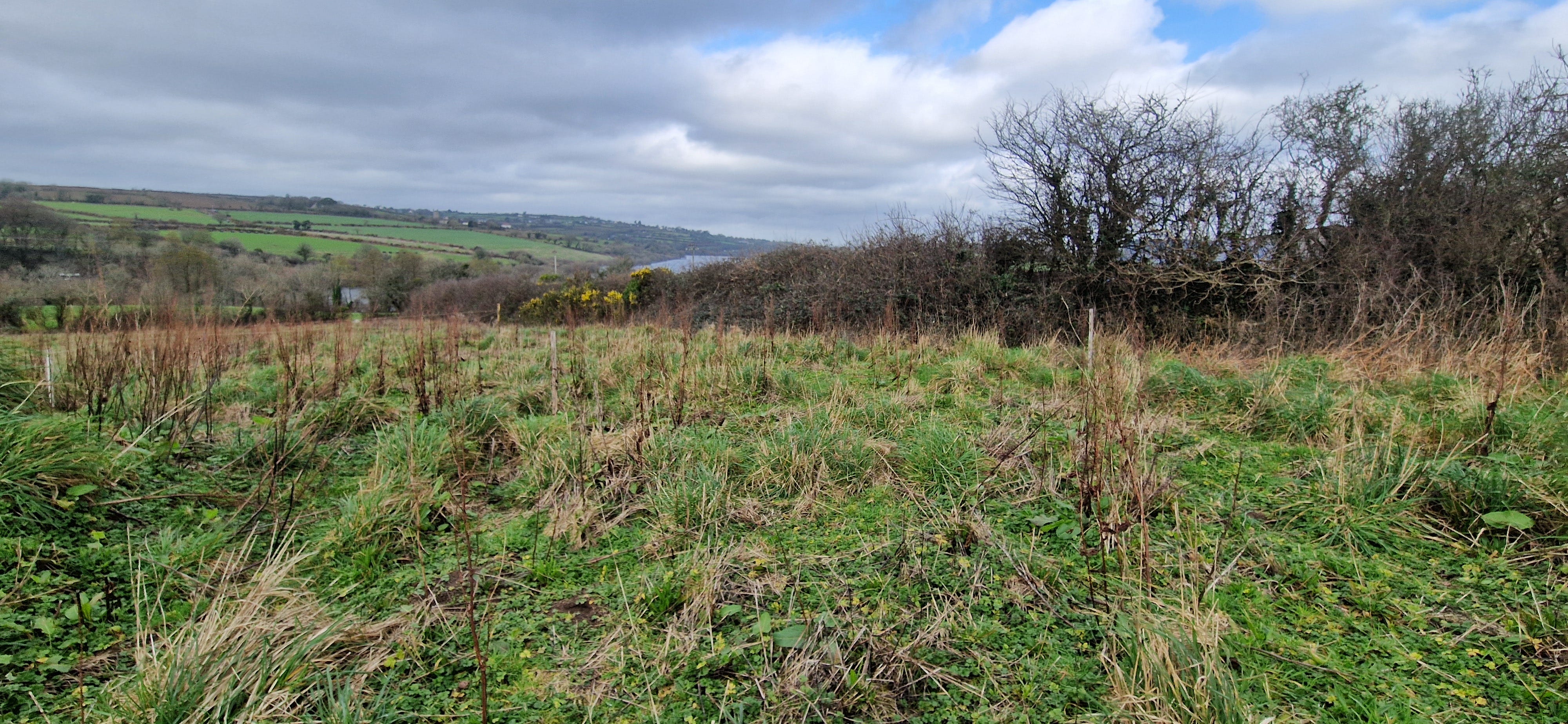
Ooo - rugged!
There are two ways people can join in.
If you would like to get involved straight away, you can sign up as an official volunteer and join us for the early stages of preparing the land.
If you are interested but not ready yet, you can also sign up simply as an expression of interest. That just means you will hear about opportunities later as the project grows.
There is no pressure to do anything at any time. While we are still building our inclusive volunteering model, the system will be very simple. When something is happening, I will send an email to everyone on the volunteer list. If you would like to come along, you can reply yes. If you cannot make it, you do not need to do anything at all.
No expectations, no judgement, and no obligation to attend regularly. Some people may want to come often, others might only join occasionally, and some may simply want to stay on the list to see what comes up.
I have also been working on some pretty cool benefits for my volunteers, which I’m excited to now be able to share with you all!
If you would like to register as an official volunteer, you can do so HERE.
A very encouraging meeting
I also had the chance this week to sit down with Cornwall Council’s Senior Marine Officer to talk through the Ocean Buffer Project™ in a bit more detail.
It was one of those meetings where you walk in hoping the idea makes sense to someone who really understands the marine environment here. Not going to lie, it was a bit daunting! I explained the algae trials, the community hub, the workshops and the plan to involve volunteers and schools.
Her response was extremely encouraging. She said she really liked the project and felt it was a thoughtful approach to engaging people with ocean science and climate action. Hearing that from someone working directly in marine policy and conservation meant a great deal.
She also suggested a few ways the project could connect more closely with the wider marine community in Cornwall.
As a result, I have now been invited to join the Cornwall Marine Liaison Group, which is coordinated by Cornwall Wildlife Trust, and also the Cornwall and Isles of Scilly Marine and Coastal Partnership. Both groups bring together organisations working across marine science, conservation, fisheries and coastal management.
Perhaps most exciting of all, she also recommended that I present the Ocean Buffer Project™ at both of their quarterly meetings.
That feels like a really valuable opportunity. These meetings bring together people who work across many different parts of the marine sector, and it will be a chance to share what we are doing, hear feedback and hopefully learn from people who have been working in this field for much longer than I have. Again, I won’t pretend that this seems pretty daunting for my little project! But, wow, what a chance to spread the OBP love.
For a project that started with a few jars on a windowsill, it feels like a very meaningful step forward.

I'm a registered volunteer myself with CWT, so it is a really exciting opportunity!
A visit to the land
This week I also spent some time over at the land in Treverva with the Falmouth University interns who are helping with media for the project.
They came along to film some footage and record audio that we can use for better quality video reels and for the new podcast. Up until now a lot of the documenting has been done quite informally, so it was really nice to have people there who know how to capture things properly.
We walked around the space, talked through the plans for the hub and recorded a few pieces about the algae trials and the wider ideas behind the Ocean Buffer Project™. It was a really enjoyable afternoon and it made the whole thing feel a bit more real, seeing the place through fresh eyes.
It was also just nice to have other people there. That piece of land already feels quite special to me, and sharing that feeling with others was something I had been hoping for.
By the end of the visit I had also managed to “convince” them to sign up as volunteers, which felt like a small but lovely win!
A first meeting
A final small update from this week.
I joined my first Climate and Environment Alliance meeting after becoming part of Cornwall VSF (Volunteer Sector Forum).
I cannot pretend I understood everything that was discussed!
There are a lot of organisations involved, a lot of moving parts and a lot of experience in the room. But it was genuinely encouraging to listen to people who are all working, in different ways, towards protecting the environment here in Cornwall.
It reminded me that this work does not happen in isolation. There are many people and groups trying to do their part.
I am looking forward to learning more about how it all works and gradually becoming part of that wider network.
It’s really promising to have these avenues to explore and imagining the longevity of this project.
Introductory Evening
Don’t forget! You can join us on 26th March - find out what we’ve been up to, see the tanks in real life and see if you’d like to get involved!
Register HERE
🌿 The Ocean Buffer Hub is coming in 2026.
Born in Cornwall | Built for the planet.
🌍 Check out our online shop and all other resources HERE

Proud to be part-funded by Cornwall Council’s Climate and Nature Fund.

Ocean Buffer Hub made possible by The National Lottery Community Environment Fund.

Ash x
Founder, Ocean Buffer Project CIC
📍 Cornwall, UK
> © 2026. All rights reserved. Please do not reproduce without permission. But do share the science far and wide!